Policy and Strategy
Human Rights Policy of the IINO Group
As a global company, the IINO Group recognizes that it has a social corporate responsibility to respect the human rights of all people. In September 2022, the Group became a signatory expressing its support for the United Nations Global Compact, and on October 27, 2022, the Board of Directors resolved to establish the IINO Group Human Rights Policy as the highest level human rights policy based on the management philosophy of IINO LINES. The policy has since been reviewed and revised as necessary. The IINO Group respects the human rights of all stakeholders associated with its business activities and fulfills its responsibility to respect human rights by taking action on potential direct or indirect negative impacts on human rights caused by all manner of its business activities.
Compliance with International Labor Standards and Frameworks
We comply with the 2006 Maritime Labor Convention (MLC 2006), which prescribes the elimination of all forms of forced labor, the effective abolition of child labor, the effective recognition of the right to freedom of association and collective bargaining, and the elimination of discrimination with respect to employment and position, and work to protect the human rights of crew members.
With regard to onshore personnel, we comply with the international labor standards formulated by the International Labor Organization (ILO), which have a certain impact on the development of domestic and overseas legislation. We also comply with various laws and regulations, such as the Labor Standards Act, labor laws and regulations that follow the Industrial Safety and Health Act, and the Labor Contract Act.
Communicating Corporate Policies on Labor Standards
The Human Resources Department ensures compliance with employment-related laws and regulations and monitors the status of revisions or abolitions to relevant laws and regulations, such as regulations concerning working hours or holidays prescribed by the Labor Standards Act, and amendments concerning the mandatory use of annual paid leave.
HR-related regulations such as Employment Rules are posted to the company intranet, and regulations for each assigned work location are made available for viewing at all times. Revisions to internal regulations and personnel systems are explained as needed through regular meetings between labor and management and shared via postings on the intranet.
Support for the UN Global Compact
IINO has signed a statement of support for the United Nations Global Compact (UNGC), an initiative proposed by the United Nations, and has been registered as a participating company as of September 29, 2022.
UNGC is the world's largest sustainability initiative, in which the United Nations and the private sector (corporations and organizations) work together to build a healthy global society.
Companies and organizations that sign the UNGC continue to work toward the realization of the ten principles, which are based on the commitment of top corporate executives themselves to the protection of human rights, elimination of unfair labor practices, environmental measures, and prevention of corruption, and to make continuous efforts to realize these principles.
The Ten Principles of the United Nations Global Compact
| Human Rights | Principle 1: | Businesses should support and respect the protection of internationally proclaimed human rights; and |
|---|---|---|
| Principle 2: | make sure that they are not complicit in human rights abuses. | |
| Labour | Principle 3: | Businesses should uphold the freedom of association and the effective recognition of the right to collective bargaining; |
| Principle 4: | the elimination of all forms of forced and compulsory labour; | |
| Principle 5: | the effective abolition of child labour; and | |
| Principle 6: | the elimination of discrimination in respect of employment and occupation. | |
| Environment | Principle 7: | Businesses should support a precautionary approach to environmental challenges; |
| Principle 8: | undertake initiatives to promote greater environmental responsibility; and | |
| Principle 9: | encourage the development and diffusion of environmentally friendly technologies. | |
| Anti-Corruption | Principle 10: | Businesses should work against corruption in all its forms, including extortion and bribery. |
(Source *Only in Japanese) https://www.ungcjn.org/gcnj/principles.html#principles
Structure
Implementation of Human Rights Due Diligence
The IINO Group respects internationally recognized human rights as stipulated in the International Bill of Human Rights, the ILO Declaration on Fundamental Principles and Rights at Work, the Maritime Labour Convention 2006, and the Children's Rights and Business Principles.
The Group will establish a human rights due diligence mechanism to identify any actual or potential adverse impacts on human rights in the Group's business activities and value chain and continuously implement measures to prevent or minimize such impacts. In addition, the Group will appropriately disclose information on its efforts and progress in respecting human rights through its website and integrated reports.
Identification of Human Rights Risks
Based on international human rights standards and guidelines, publicly available materials issued by organizations such as the Japan Federation of Bar Associations, the Ministry of Foreign Affairs of Japan, and the Ministry of Justice, as well as materials provided by external legal counsel, the Group comprehensively identified potential human rights risks associated with its business activities, including shipping and real estate. Interviews were then conducted across the Group, and each identified risk was assessed and scored from the perspectives of severity (scale, scope, and remediability) and likelihood of occurrence. In addition, the human rights risk map established in 2022 has been reviewed in light of changes in the external environment and the Group's business environment, based on the results of interviews and internal and external surveys. Most recently, the review was conducted in 2026. Risks that exceeded a certain threshold in the scoring assessment were mapped, and, based on advice from external experts, the Group identified those considered most material.
As a result of the review, the number of priority human rights risks was narrowed from 16 to 9, allowing the Group to focus its efforts on areas presenting the highest level of risk.
For the identified risks, questionnaires are distributed to the relevant departments and Group companies to assess the status of each risk. Additional interviews are conducted with departments and Group companies where risks are deemed high or where progress has been insufficient. Furthermore, the Group continuously manages and improves its human rights initiatives through a PDCA (Plan-Do-Check-Act) cycle to enhance the effectiveness of its human rights due diligence efforts. Specifically, the Group formulates response measures for each priority risk (Plan), implements them across relevant departments and Group companies (Do), monitors progress through questionnaires and other measures (Check), and takes corrective and improvement actions based on the results (Act).
Initiatives
Preventing Child Labor and Forced Labor
The IINO Group has adopted the prevention of child labor and forced labor as a basic policy. With regard to seafaring personnel, we comply with the 2006 Maritime Labor Convention (MLC 2006), which prescribes the elimination of all forms of forced labor and the effective abolition of child labor and work to protect the human rights of crew members.
We comply with all applicable domestic labor laws and regulations-including the Labor Standards Act, the Industrial Safety and Health Act, and the Labor Contracts Act-in relation to our shore based employees. These laws are built on international labor standards established by the International Labour Organization (ILO), and our practices are aligned with international labor norms.
Furthermore, during the hiring process, we confirm each applicant's voluntary intent to apply. We also maintain an external reporting hotline as a precautionary measure, thereby reinforcing our commitment to preventing child labor and forced labor.
Preventing Overwork and Reducing Excessive Working Hours
To prevent overwork, the IINO Group observes various laws and regulations in Japan, including the Labor Standards Act, practices labor management, and works to reduce excessive working hours as basic policies. We thoroughly manage the working hours and labor of both onshore and seafaring personnel and give detailed consideration to employee welfare by following up on employees working extended hours and deploying additional seafarers to the vessels we manage that are expected to encounter issues of overwork.
As initiatives for onshore personnel, we monitor working hours using a work attendance system, conduct interviews with employees about their working hours, notify the supervisors of employees who may have to work for long periods by email, provide notifications to those working for long periods using the work attendance system and communicate information verbally, report to the Health Committee about the working hours of union members, and give briefing reports to the monthly department managers meeting.
As initiatives for seafaring personnel, we have equipped the vessels we manage with work and rest period management systems, monitor and manage the rest periods of crew members, and consider suggestions for improvements. We also assign additional crew to vessels we manage that are expected to require overwork.
Provision of Living Wages in Excess of Minimum Wage Levels
The IINO Group observes regulations concerning minimum wages in accordance with the laws and regulations of each country and follows the basic approach of paying in excess of those wages. Similarly, with regard to crew members assigned to ocean-going vessels, we observe the minimum wage regulations set forth in International Bargaining Forum (IBF) labor agreements that represent international labor-management agreements and pay wages in excess of those levels.
Regarding overtime work, we comply with the premium wage rates stipulated under the Labor Standards Act. In addition, for working hours that exceed our prescribed working hours of seven hours per day but do not reach the statutory working hours of eight hours per day, we provide allowances at a fixed rate in accordance with our internal company rules. For employees assigned outside Japan, we calculate and provide compensation based on the principle of ensuring equivalent purchasing power to that of employees working domestically. Using index data from external organizations-reflecting the cost of living index and exchange rates for the assignment location-we determine wages by applying these indices to the equivalent cost of living in Japan.
The average annual salary for our land based and seafaring employees (211 persons) in FY2024 was 12.866 million yen.
Provision of Living Wages in Excess of Minimum Wage Levels
The IINO Group observes regulations concerning minimum wages in accordance with the laws and regulations of each country and follows the basic approach of paying in excess of those wages. Similarly, with regard to crew members assigned to ocean-going vessels, we observe the minimum wage regulations set forth in International Bargaining Forum (IBF) labor agreements that represent international labor-management agreements and pay wages in excess of those levels.
We observe the extra pay rates for overtime work prescribed in the Labor Standards Act and calculate work outside scheduled working hours that do not exceed statutory working hours (40 hours per week, 8 hours a day) but exceed the Company's scheduled working hours of seven hours a day using a certain extra rate. In addition, for employees of the Company working outside Japan, based on a basic approach of guaranteeing the same purchasing power in the assigned country as employees working in Japan, we use index data from an outside organization on a cost of living index of the place of work that is the equivalent of living expenses in Japan and multiply it by the exchange rate in order to calculate the wage to be paid.
Note that the average annual salary of the 209 onshore and seafaring personnel working at IINO LINES is 12,850 thousand yen (as of fiscal year 2025)
Identifying Salient Human Rights Issues Unique to Our Business
The IINO Group promotes initiatives to respect the human rights of all stakeholders involved in its business, including in the following areas that impact its business activities. We actively seek out dialogue and discussion with various stakeholders regarding the human rights issues that are identified.
Employees (onshore)
We respect the human rights of IINO Group employees, observe various laws and regulations, including the Labor Standards Act, and promote the development of a working environment and programs conducive to a diverse range of human resources.
Crew Members of Ocean-going Vessels
As a part of maritime work style reform efforts, we place importance on shipboard communication and make efforts to spread the attitudes of (1) "Speak up" (actively listening to suggestions from junior crew) and (2) "Listen up" (having senior crew listen to the opinions of junior crew). We also promote dialogue between crew members to make ongoing improvements to the working environment.
Business Partners (supply chain)
We respect the human rights of business partners in all countries and regions in which we operate. We deal with all business partners on an equal footing in a sincere, courteous, and kind manner, respect their privacy, and thoroughly protect their personal information.
Awareness Raising on Respecting the Human Rights of Group Officers and Employees
IINO provides human rights education and training to all directors, officers, and employees, including those of Group companies, as well as seconded and temporary staff, to promote compliance with its Human Rights Policy and advance its commitment to respecting human rights. Through these training programs, the Group explains its human rights initiatives to directors, officers, and employees, covering topics ranging from fundamental concepts such as the business environment, current trends, and "Business and Human Rights" to identified human rights risks, including child labor, forced labor, discrimination, and harassment.
Additionally, to coincide with our support for the UN Global Compact, we have posted the "Preventing Human Rights Infringements" compliance course e-learning training video and Human Rights Policy clearly stating respect for human rights on our intranet designed as a medium for in-house communication and have disseminated information among all Group officers and employees on the need to respect human rights.
Modern Slavery Act
In response to the UK Modern Slavery Act 2015, the Group has published a 'Slavery and Human Trafficking Statement' on its website as follows.
IINO Kaiun Kaisha, Ltd. / Slavery and Human Trafficking Statement FY2025 (324 KB)
Expert comment on human rights initiatives
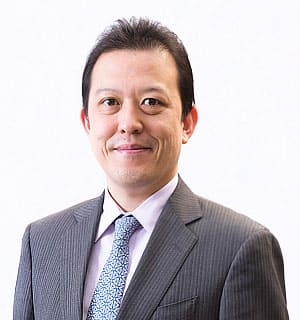
Vice President, Rikkyo University
- [Brief History]
-
1994 The University of Tokyo Faculty of Law
1996 The University of Tokyo Graduate School, Division of Law and Politics Subsequently, he served as a Lecturer, Associate Professor (as old post name), and Associate Professor at Rikkyo University, and is currently a professor at Rikkyo University. He specializes in commercial law and corporate law.
He has served as a member of the Deliberation Council of the Ministry of Justice in the Working Group on Commercial Law -- Bills of Lading and Working Group on Commercial Law --Transportation Law and Maritime Commerce Law, and chaired the Study Group on Guidelines for Respecting Human Rights in Responsible Supply Chains.
His publications include Company Law (5th Edition, co-author), Yuhikaku Publishing, 2021, and The Fundamentals of Shareholders' Meetings, Yuhikaku Publishing, 2010.
We received comments from Professor Matsui of Rikkyo University regarding our business and human rights initiatives. The following is an excerpt of his comments on our efforts. Note that the comments are based on information available as of the end of May 2023.